
Let’s roleplay. ( ͡° ͜ʖ ͡°)
You are a 23-year-old student from India. You are highly intelligent and invested in your research area. You’ve been studying for college entrance exams since you were 14 years old. You graduated from one of India’s top universities in a STEM discipline, now you just got accepted into an American university, who has certified that you are physically and financially capable of attending. Congratulations!
They mail you this:
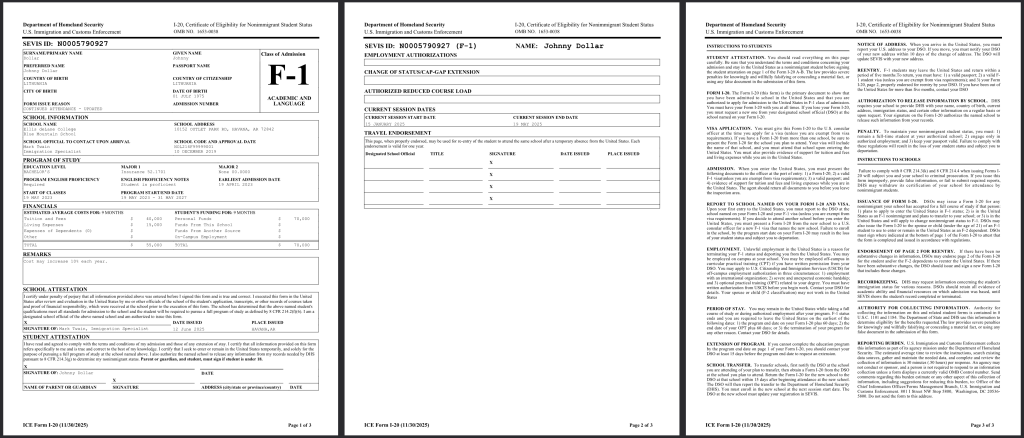
Your plan is to get naturalized and eventually become a US citizen. But… this will take years. YEARS!!!! And there is no guarantee you’ll make the cut. There is no direct pipeline from international student to permanent resident, so you’ll have to game the system and shimmy around the rules to level the odds in your favor. Since you’re such a good, law-abiding boy (or girl), you decide to take the legal route. (For now.)
Step 1: Get your F-1 student visa
Between your SEVIS fee and visa application (MRV) fee, you fork over around 325$ just for the application and interview.
(SEVIS: Student and Exchange Visitor Information System)
You start by applying for the visa and booking your consular interview on this shitty website.
You can expect a 1-2 month wait time until your interview. In some worst case scenarios, they may schedule it out further than your start date at your university. In that case you’re probably screwed.
Now let’s say I am a consular officer working for the US Department of State, and you’re here with me at the US Consulate in Mumbai.
(There are five US consulates in India: New Delhi, Mumbai, Hyderabad, Chennai, and Kolkata.)
I’m going to interview you and then decide whether to issue or deny your student visa. This might go more smoothly if you’ve been accepted for a PhD program of study; Signed documentation of your funding in the US can make the decision more straightforward. It also helps if you’ve already been in the US for tourism, trade, or an exchange program. In those cases you would already have a B-1 or J-1 visa, respectively.
If you’re planning on naturalizing or working toward a green card, don’t tell me! I’m legally obligated to deny your student visa on the spot. You have to focus entirely on your student intent, and make it clear you’re coming back to India after you graduate! Now, let me interview you:
- Why do you want to study in the United States instead of India?
- Why did you choose this university over others?
- What’s your specialization? How does it fit your academic background?
- Who is sponsoring your education? What is their income source?
- How will you afford living expenses and tuition costs shown on your I-20?
- Do you have any relatives working in the United States?
(If you say yes, you may get denied.) - What are your career plans in India after you complete your degree in the US?
- If someone offers you a high-paying job in the US after you graduate, what would you do?
(Trick question, lol.)
Nice, you’ve completed your interview. Luckily I’m in a good mood today so I’m granting your F-1 student visa. Here you go:
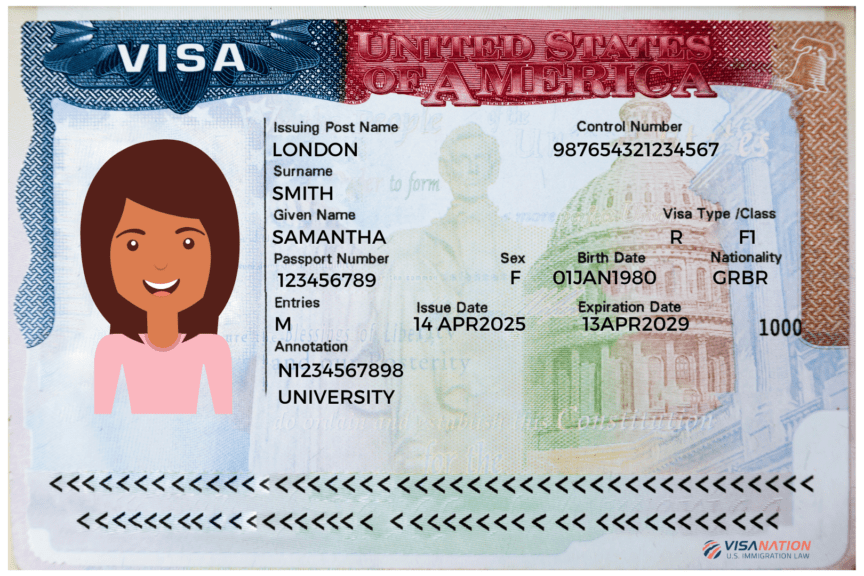
With your F-1 visa, you are explicitly a non-immigrant. Your visa is tied to your study. It grants you permission to enter the country, but it has a time limit and specific purpose.
Now the big day has arrived. You’ve just touched ground in the US, and you have to get through US Customs and Border Protection (US CBP). Even with the visa they can still reject you at the gate and send you back to India. So smile big and look pretty.
Step 2: Get your H1-B work visa
Fast forward 5 years: You have just graduated from an American university. Congratulations! Now it’s time to find a job in the United States. It’s not legally required to get the H1-B before you become a permanent resident, but many people pick this route because it buys them more time to become one. (Normally 6 years.)
After graduating, you obtain an OPT (Optional Practical Training) work authorization tied to your F-1 visa which gives you 12 months to work here. If you graduated with a STEM degree, they may give you 24 months. Since India is such a high-demand country, it will probably take a lot longer than that for you to get your H1-B work visa.
An H1-B visa is tied to a specific employer, and usually you need at least a bachelor’s degree for it. The amount they can issue is capped, so they can only give out a limited amount per year; Congress has recently capped it at 85,000 total annually–That’s 65,000 for the regular and 20,000 more if you have a master’s degree or higher. Employers file over 300,000 applications per year. Since US Citizenship and Immigration Services (US CIS) draws from them randomly, everyone from any country has about a 25-30% chance at receiving the H1-B in a given year. Seriously. It’s not based on grades or work performance, it’s a completely random lottery. USCIS published recent years’ registration data here.
If you are from a treaty country like Canada, Mexico, or the UK, you also have the option of applying for an E-1 visa, which are capped but rarely exhausted for some countries. Australia has its own dedicated E-3 visa capped at 10,500 which was never used up in any year.
So maybe by now you see the pickle. Your current visa and OPT will have to last long enough until you get selected for the H1-B. If you don’t get picked, then your employer will have to file again on your behalf the next year. Once your current visa forms expire, they’re no longer valid and you become undocumented. In that case, the system can treat you more leniently if you ever try to get legal instead of sitting on your ass with a fake social security number and a margarita.
Odds at being selected or the H1-B are falling rapidly. Now it’s 25-30%, but in 2008 it was only 50-60%.
Hmm… actually, your odds at getting it legally are falling rapidly. The H1-B application system, like many other application systems in America, are plagued by fraud and bad actors. Documented abuses and anecdotal sources suggest much of the overhead applications come from scammers and fake companies bloating the system, like submitting 10+ applications for the same person–at least in India.
No-clip into the shadow economy
According to foreign students I interviewed, many of these fraudulent activities involve overseas consulting companies that collect other international companies’ projects and outsource them to non-immigrants in the US under the guise of a fake, American company name or shell employer.
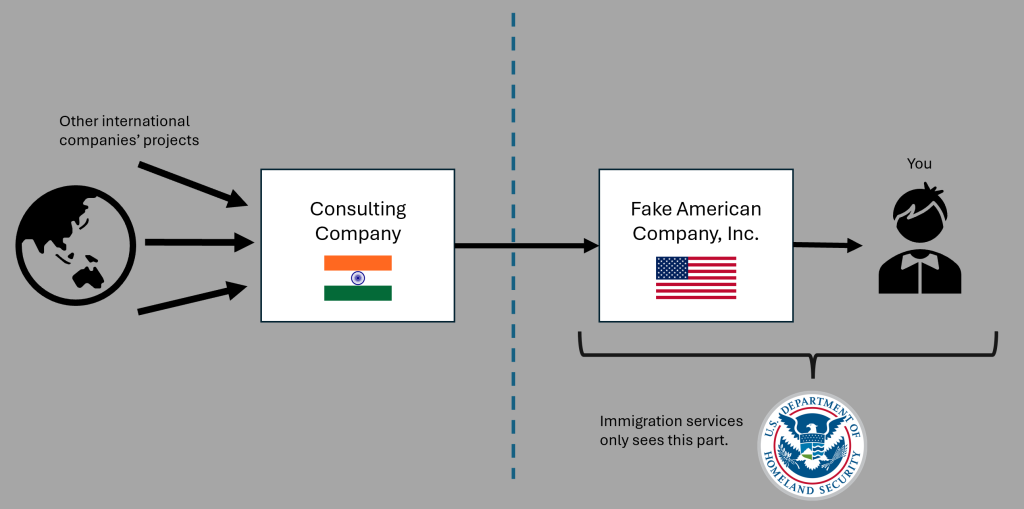
While these are real projects you’re working on, they only pay a small fraction of what an American project will pay. In that case you might have to live in a 2-bedroom apartment with 10 other people.
Most of these projects are based in computer science or something that doesn’t require the company to have a physical location on US soil.
This is one way the system is abused. This process is illegal and extremely risky. Although USCIS is becoming increasingly aware of these schemes, in many ways you can stay in the US for 20+ years so long as Immigration and Customs Enforcement (US ICE) doesn’t find you.
A standard H1-B petition involves several government fees which the employer is expected to pay: It includes an I-129 filing fee, ACWIA training fee, anti-fraud fee, a new asylum program, and maybe some other stuff. This totals out to a few thousand dollars. President Trump recently tried to slap a $100,000 fee on there as well, which was shut down by the supreme court last week.
This might be overprotective, but it could be the right target. About half (40-45%) of unauthorized immigrants in the US didn’t jump the fence–They came here legally on commercial planes with valid visas. It’s just that they never left when their visa time ran out.
Step 3: Get your EB-1 employment-based visa (green card)
If you thought getting the H1-B visa was hard, you ain’t seen nothing yet.
The green card (EB visa) will show that you are a lawful, permanent resident living and working indefinitely in the US. Your employer has to sponsor you for this, but some of the higher categories allow you to self-petition and get it faster based on your priority status. These are the main categories:
EB-1: “Priority Workers & Extraordinary Ability” – You are an outstanding researcher, professor, or worker.
EB-2: “Advanced Degrees & Exceptional Ability” – You hold a higher degree, master’s or higher; OR maybe a bachelor’s with 5 years experience on the job.
EB-3: “Skilled & Professional Workers” – Easiest to get. You need a labor certification and a full-time job with 2 years experience.
Most people are qualified for either the EB-2 or EB-3. Unlike the H1-B visas, issued green cards have a per-country limit. For high-demand countries like India and China, there is a huge backlog. Some analyses extrapolate wait times as long as 130 years (worst-case) for the EB-2 and EB-3 categories if the current laws don’t change (assuming no reforms). The US government doesn’t literally publish that as an official wait time, but given the data it can be realistically inferred that most Indian applicants wouldn’t get a green card in their working lifetime unless laws change or they pursue different categories.
Your safest bet is to marry a US citizen. Many applicants in the marriage-based green card category see their wait times shrunken down to 1-2 years depending on how clean their case is.
You will also need to complete PERM (Program Electronic Review Management) labor certification to receive your green card. Your employer will have to show the Department of Labor that they tried to recruit an American worker, but couldn’t find one able, willing, qualified, and available at the prevailing wage for that specific job.
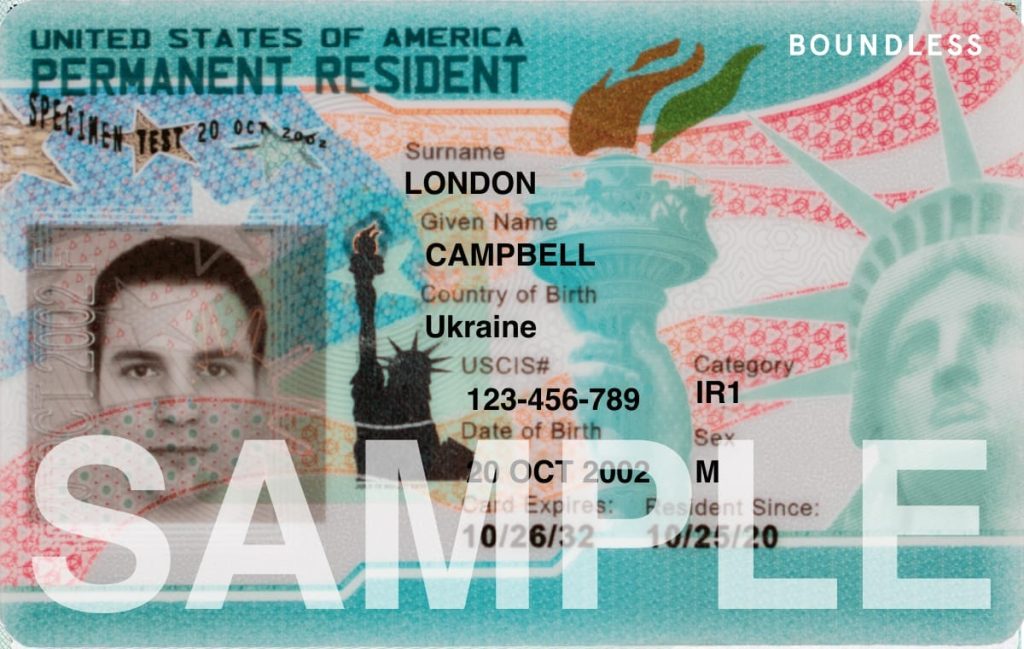
Anyway, now you are 23 + 5 + 2 + 130 years old, and you’ve lived long enough to see the day. Here is your green card:
Step 4: Get naturalized and become a citizen
Once you have your green card, you start to see the light at the end of the tunnel. The rest of the process is relatively straightforward as most of the systemic bottlenecks exist with the visas. There are no more per-country caps, and it takes at least 5 years for a green card holder to become a citizen (3 years if you’re married and living with a US citizen). You need proof that you’ve been physically present in the US for at least half of that period. Long trips (particularly over 6 months) can cause problems and might require extra proof that you didn’t abandon residence.
With that said, USCIS will look at a couple things to determine your eligibility for naturalization:
- Age
You have to be at least 18. - Good moral character
You have no serious criminal history, you paid your taxes, no immigration fraud, etc. - English literacy
You must be able to read, write, and speak basic English. (You’ll be tested during the interview.) - Civics test
You complete the written, short-answer test on US history and government. - State residence
You lived at least 3 months in the state you’re filing in. - Selective service
If you’re between 18 and 25 years old, you should have registered for this.
Lastly, you have to attend a naturalization ceremony and take the Oath of Allegiance. These are held frequently in courthouses all over the country. Sometimes they’ll hold them in large public venues like convention centers, airports, and auditoriums if they’re naturalizing hundreds of new citizens. Here’s an example of one in Washington DC:
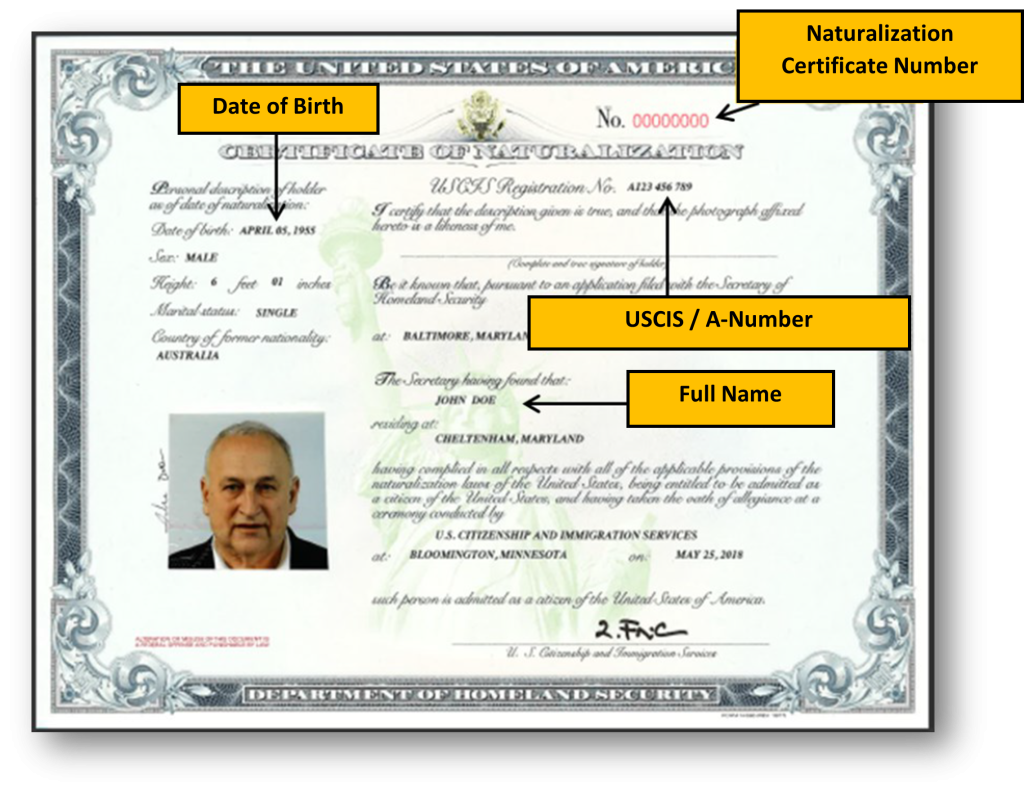
With that, you finally receive your certificate of naturalization and you are officially a US citizen. YAAAAAYYY!!! YAAAAAYY!!!
For many people, the biggest challenge is achieving immigrant status by getting the green card. Policy right now is shifting to make H1-B visas more expensive, scrutinized, and restrictive by requiring higher filing fees and more documentation. Limits and backlogs have effectively frozen progress for certain countries. That doesn’t mean it’s impossible, but the system can be highly stacked against you depending on what country you’re applying from.
Many students and foreign workers want desperately to live in the US, but not everyone is like that. Some people can live comfortably anywhere in the world as long as they make money.
BUH–